Every December, this is one of the questions on everyone's agenda: Will it be a white Christmas? Traditional meteorology has struggled with long-range predictions; however, AI is proving to be the key difference. By utilizing the vast quantities of summarized data contained in the atmosphere, AI models can offer new insights into seasonal weather patterns. The technology has the potential to deliver the answers we have long sought and demonstrate how machine learning is transforming our understanding of the sky.
How Traditional Weather Forecasting Falls Short

The standard weather forecasting methods are based on numerical weather prediction models that use grid squares to structure the atmosphere and determine how the weather would vary over a period of time. Although these models perform very well in short-term predictions, they struggle to make accurate seasonal predictions, as atmospheric systems are inherently chaotic and unpredictable.
It is more difficult when it comes to making predictions of a particular phenomenon, such as Christmas snowfall. Two-week weather systems rely on billions of variables, any of which can radically change them. The slight variations in climate, important in temperature, pressure, or wind patterns, can spell the difference between rain and snow on 25 December.
Meteorologists have long employed statistical techniques and pattern recognition to make predictions beyond the 7-10 day forecast window, which is considered reliable. They explore records, search for and find common weather patterns, and use probability-based forecasts. Nevertheless, such methods are not always accurate enough to make correct conclusions many weeks before a white Christmas.
The AI Revolution in Weather Prediction
Artificial intelligence is transforming the way weather forecasting is conducted, as it enables the processing of information that would be impossible without its use. Handing decades of historic weather statistics simultaneously to machine learning algorithms can reveal small, unusual patterns that human forecasters may not detect.
Artificial intelligence-based weather forecasting is effective at identifying complex connections among seemingly heterogeneous system factors. They may find that unique ocean temperature trends in the Pacific signal greater chances of snow in the Midwest in late December. These relations usually consist of hundreds of variables interacting so complexly that they cannot be analyzed traditionally.
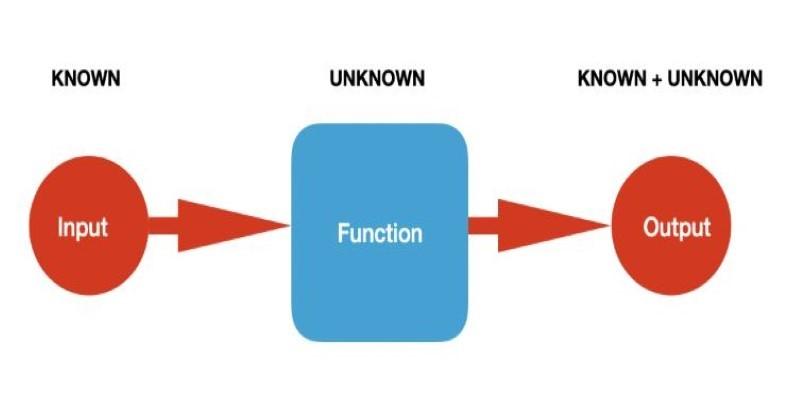
The most advanced AI weather systems currently available are deep learning networks. This type of model works by progressively layering atmospheric data and developing to identify trends related to various weather outcomes. In AI systems, there is constant improvement in knowledge, unlike in traditional models, which rely on fixed mathematical equations to handle new information.
The acceleration capability is also impressive. Traditional supercomputer systems may require hours to produce forecasts, whereas the AI system can make predictions in minutes. This efficiency enables meteorologists to perform a series of scenarios and ensemble forecasts, which in turn offer more detailed probability evaluations.
Key Technologies Behind AI Weather Models
Various innovative technologies enable AI to forecast winter weather with increasing accuracy.
Satellite Imagery and Neural Networks
Satellite imagery analysis can enable AI systems to track cloud patterns, temperature variations, and the real-time location of moisture in the atmosphere, among other phenomena, anywhere on the planet. There are also neural networks that are specifically trained to process temporal data, detecting patterns of weather changes. Such systems are trained to detect atmospheric cues that generally precede substantial snowfall, such as the temperature distribution, pressure systems, and the pattern of wind associated with white Christmas weather.
Ensemble Forecasting
Another valuable AI development is ensemble forecasting. Instead of making individual predictions, AI models are run to perform thousands of simulations with minor variations in initial conditions. This method offers a range of probabilities rather than absolute forecasts, which gives less misleading estimates of forecaster uncertainty.
Data Fusion Techniques
AI techniques and Data fusion allow an information system to assimilate information from various sources concurrently. Weather stations on the ground, ocean buoys, airplane sensors, and satellite measurements all use complementary data to create a complete picture of the weather, making predictions more precise.
Real-World Applications
Several weather agencies and research organisations have already implemented AI models to forecast the seasons. The European Centre for Medium-range Weather Forecasts has incorporated elements of machine learning into its seasonal forecasts, demonstrating improved performance in winter precipitation predictions.
In 2023, Google introduced its AI weather model, which proved incredibly successful in short-term precipitation forecasting. It is not aimed at seasonal predictions, but the technology behind it has the potential to predict even further into the future.
Instead, other specialized AI programs, beyond those presented by Weather Bureau International Inc., are being developed by commercial weather services, such as The Weather Company by IBM and Microsoft, through their AI for Earth projects. Retail companies utilize these systems to estimate the demand for winter merchandise and, in collaboration with transportation companies, plan their routes by considering the anticipated weather patterns.
Limitations and Challenges
Despite their grand achievements, AI weather models do not accurately predict white Christmas conditions. Chaos theory remains applicable to the atmospherics, which means that minimal changes in initial conditions may produce an extremely different result over time.
The training data needed to deploy AI models is incredibly large. Nevertheless, absolute weather phenomena, such as significant snowstorms, are quite rare, so machine learning algorithms have fewer examples to examine. This shortage may lead to overfitting, where models are effectively estimated on the training data but fail to generalize to new circumstances.
Another challenge is the regional variations. AI applications that process data in a single location may fail to provide accurate outcomes in new places with different climatic conditions. Local terrain typography and height variations can all have an impact on snowfall in a manner not accurately represented by global artificial intelligence models.
Current Accuracy and Future Improvements
The current AI weather prediction algorithms exhibit fine improvements in terms of seasonal forecasts, but forecasts for a white Christmas remain elusive. Existing systems can detect higher or lower winter precipitation potential probabilities with a higher level of assurance, 2-4 weeks in advance.
The accuracy of the PI seasonal forecasts generated by AI generally ranges from 60% to 75% in predicting a general weather pattern during winter. However, specificity, such as 25 December, greatly limits precision, just as it does with earlier forecasts.
Several sources will help in improving the future. With quantum computers, more difficult climate modeling would be possible, as exponentially more varied combinations of data could be calculated. With improved satellite technology, AI systems can be constructed by providing greater resolution to the analyzed atmospheric observations.
Preparing for Your White Christmas

Although AI weather models are steadily improving, a game of probability remains when planning to drive in case of a possible snowstorm around the corner on Christmas. Compare various weather interfaces and seek agreement between different forecasting agencies instead of relying on a single forecast.
The AIs have begun to forecast possibilities in weather applications, rather than making final predictions. Look at these probabilities—a 40% possibility of snow does not have the same planning implications as an 80% possibility. Smart planning takes into consideration various situations depending on the probabilities of the forecasts.
Consider past trends and AI predictions. In this case, weather predictions that predict more snow over the winter period will be more convincing in regions where snow in late December is common than in areas where it is often absent during the Christmas months.
Final Thoughts
AI weather models are just the start of a forecasting revolution. As machine learning algorithms become more advanced and training data expands, seasonal weather predictions will improve. The dream of accurately predicting a white Christmas weeks in advance could soon be a reality. Until then, AI remains our best tool for understanding the complex atmospheric dance that determines whether snow or sunshine will fall on 25 December.